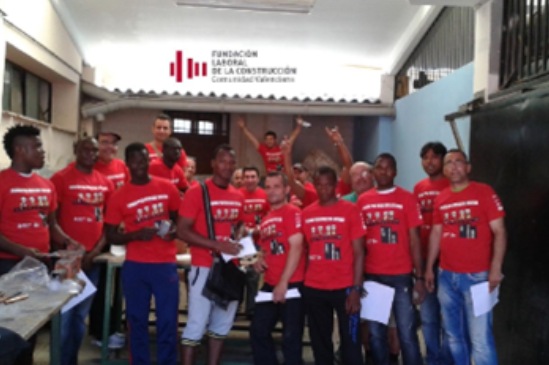

A total of 21 refugees and asylum seekers received training in masonry and electricity in the Valencian Community, thanks to a collaboration between the Fundación Laboral de la Construcción, the Spanish Commission for Refugee Aid (CEAR), and the Refugee Reception Centre (CAR) in Valencia. Starting on June 6, an 80-hour Basic Housing Maintenance course was conducted to equip participants with the skills needed to carry out minor building repairs and maintenance tasks.
The training focused on essential skills in masonry, electricity, plumbing, and painting, enabling participants to address minor issues in buildings without disrupting their use or services. In cases of more significant breakdowns, they were trained to perform urgent initial repairs until a professional arrived. This practical training aimed to enhance the employability of refugees by providing them with hands-on experience in crucial building maintenance tasks.
This initiative was part of a broader effort to support the social and professional integration of asylum seekers in Spain. Through the collaboration between Fundación Laboral, CEAR, CAR, and ACCEM, refugees gained access to vocational training in various trades, improving their professional competencies and increasing their chances of employment. This programme not only strengthened their job prospects but also facilitated their integration into society.